Lovebird care, types and gear
Lovebirds: small parrots, unreasonably big personalities.
Care guides, color spotlights and honest buying guides for anyone who shares a home with these loud, loyal, impossible-to-ignore little parrots.
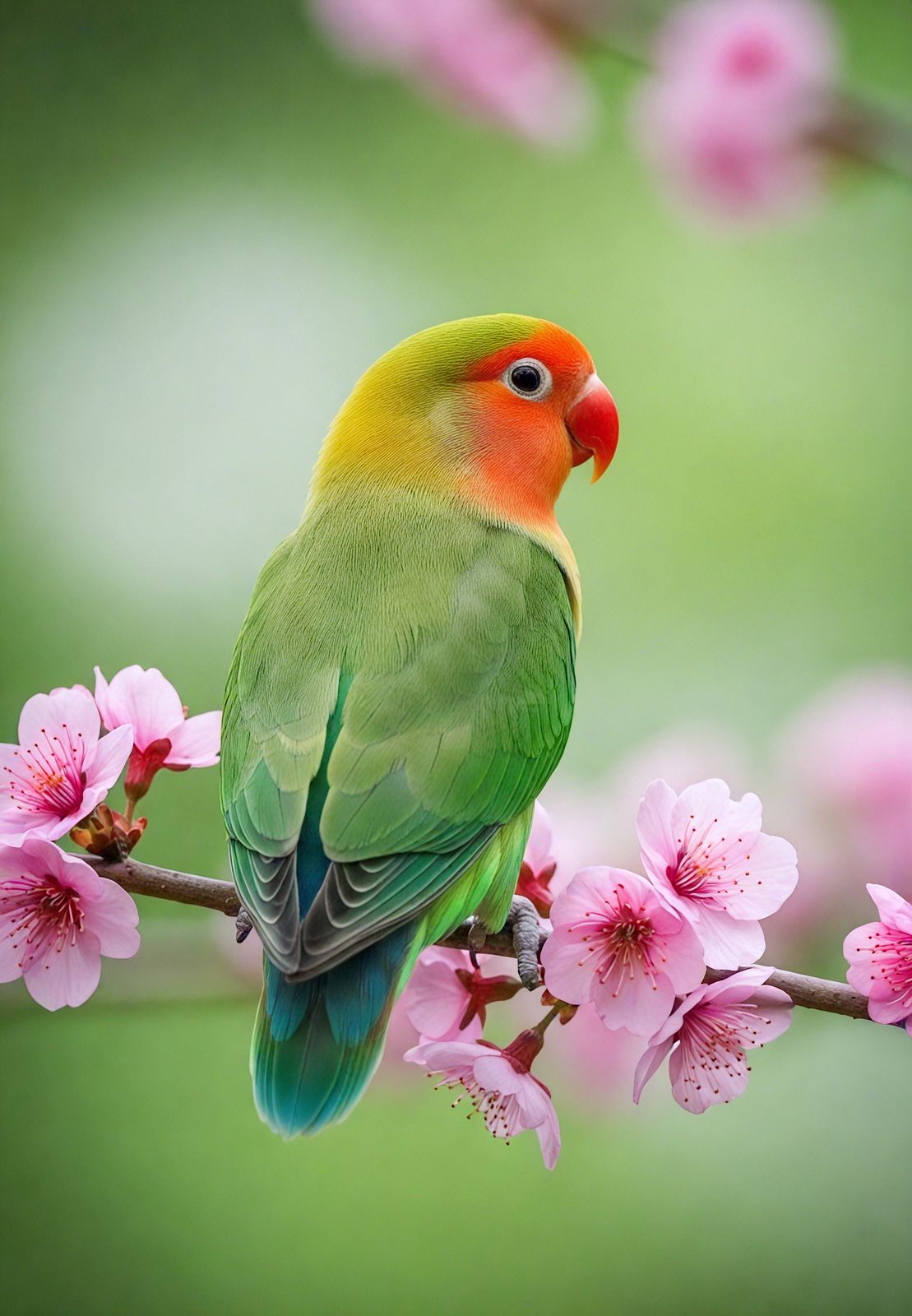
What are lovebirds?
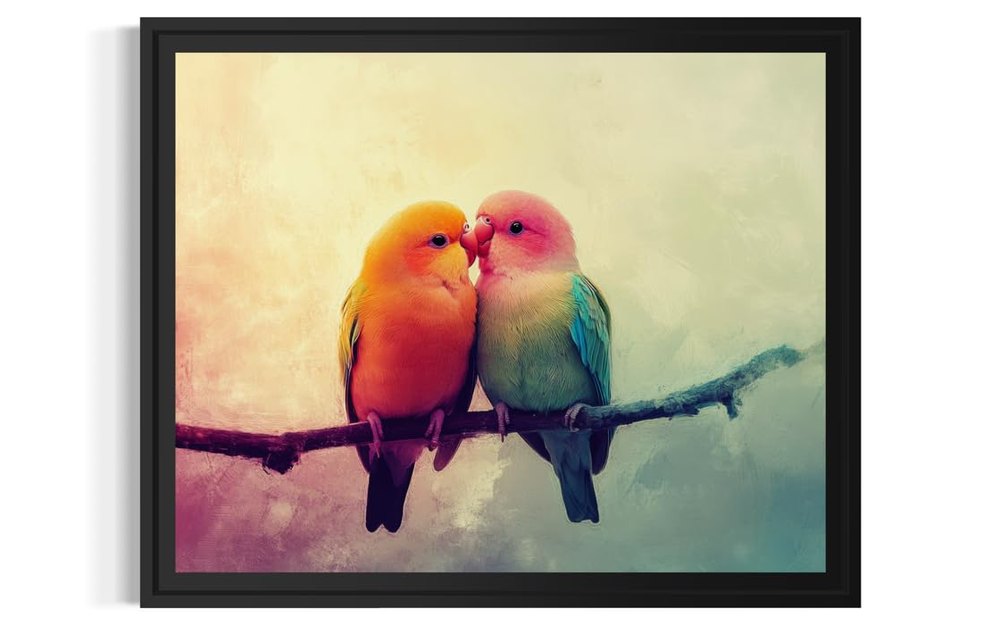
Lovebirds (sometimes written as two words, “love birds”) are a group of nine small parrot species from Africa and Madagascar. They are known for strong pair bonds, sharp personalities and vivid colors, which makes them one of the most popular small parrots to keep as a pet.
Whether you already live with a pair or are still deciding on your first lovebird, the guides below cover the basics: the right cage, what to feed, how to keep a curious beak busy, and how to tell the species and color mutations apart.
Start here
Pick the guide that matches where you are with your lovebirds.
Meet the flock
Same small genus, a whole spectrum of looks. A few of the color mutations you’ll see on our page. See all lovebird types.
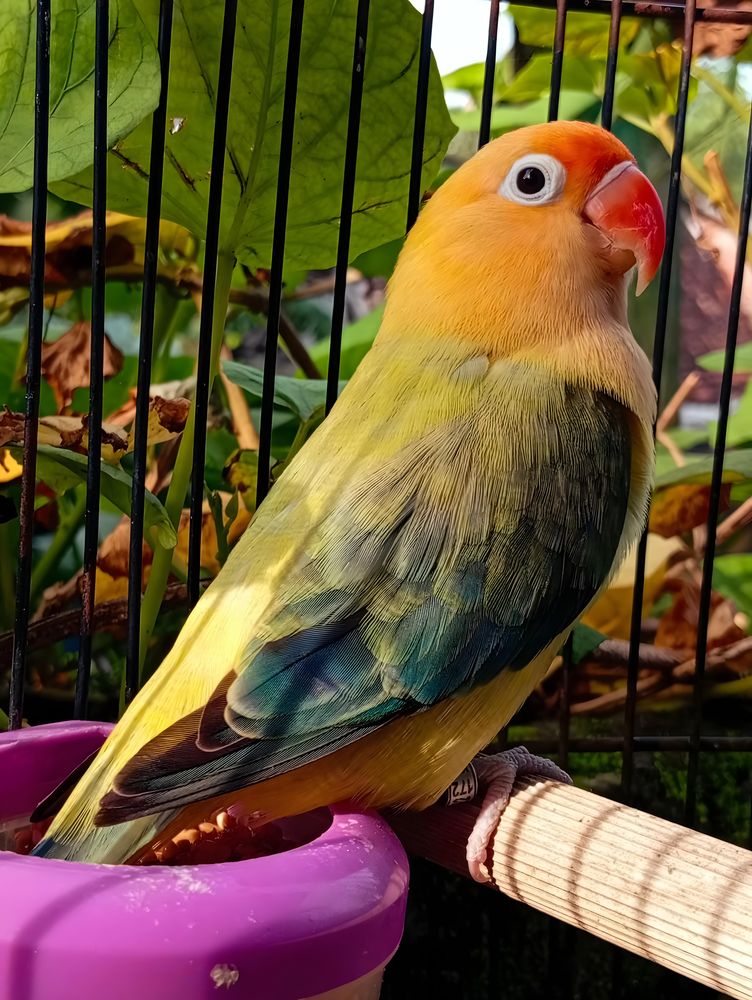
Peach-faced Lovebird
The classic face of the hobby: a warm rose-orange wash across the forehead, cheeks and throat.
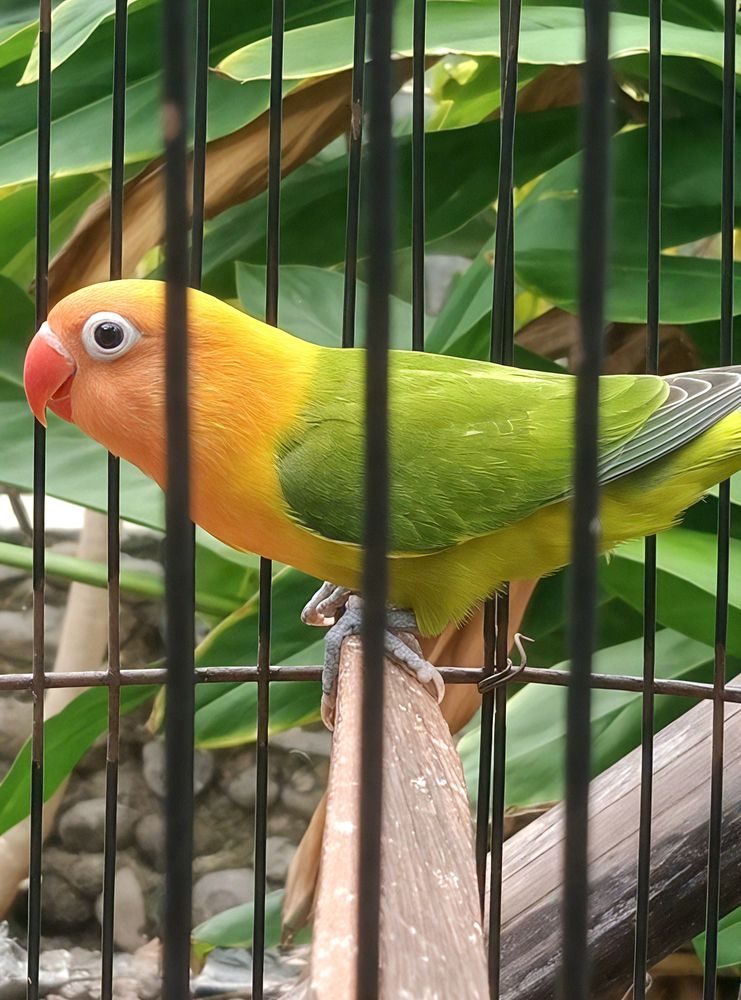
Fischer's Lovebird
A close cousin of the peach-faced, with a brighter orange hood and a crisp white eye-ring.
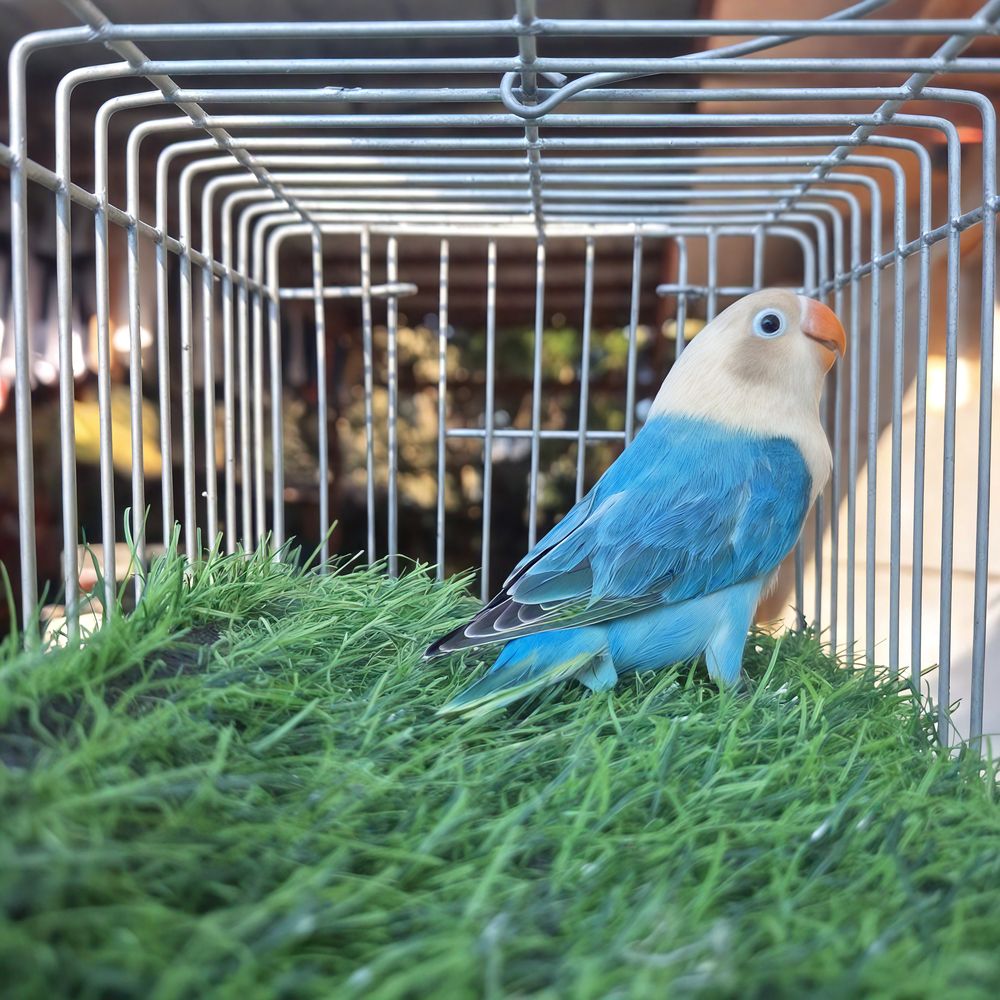
Blue Pied Lovebird
Random patches of blue and cream stand in for the usual even coloring.
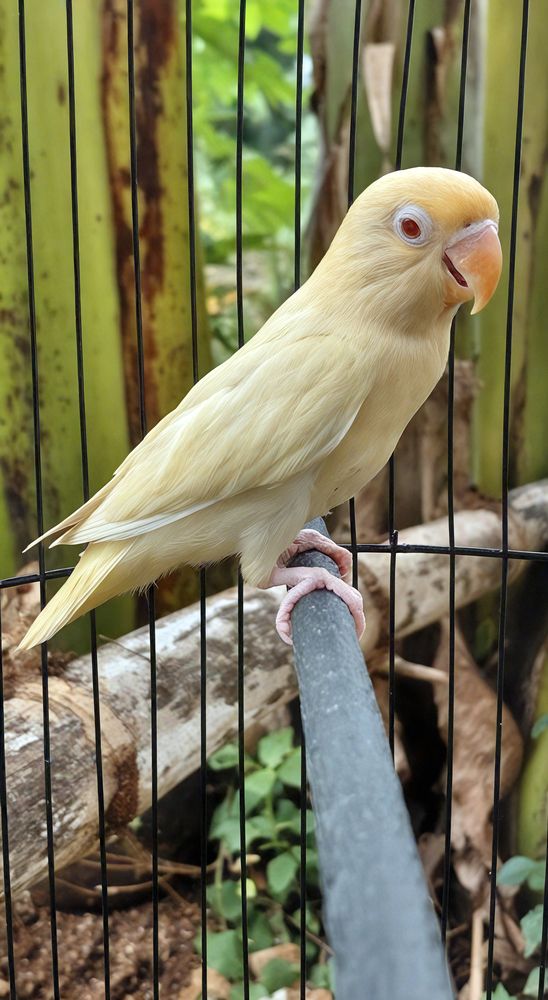
Creamino Lovebird
Pale cream from head to tail, with the telltale red eyes of an ino mutation.
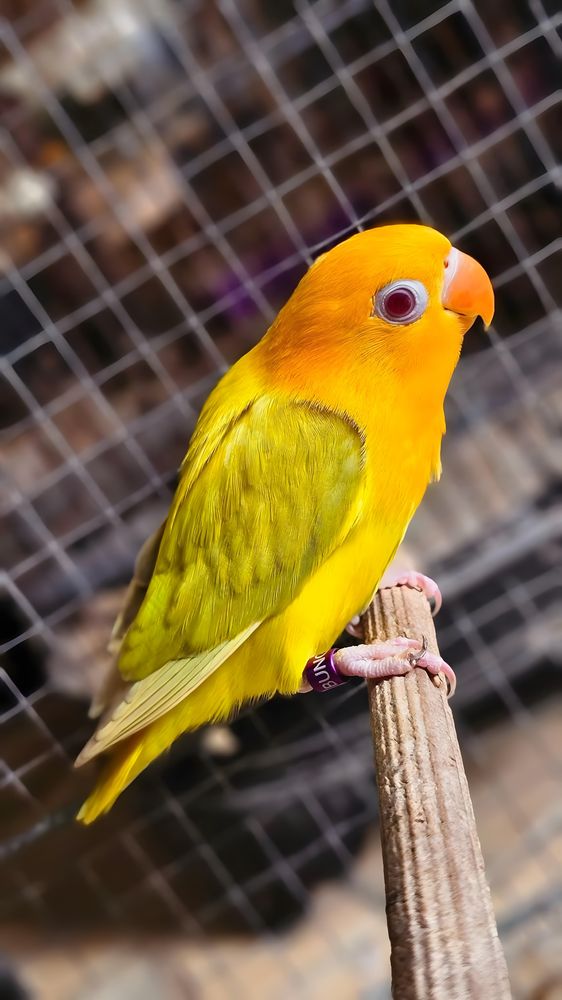
Lutino Lovebird
All the peach-faced shape, none of the green: sunshine yellow with a matching red eye.
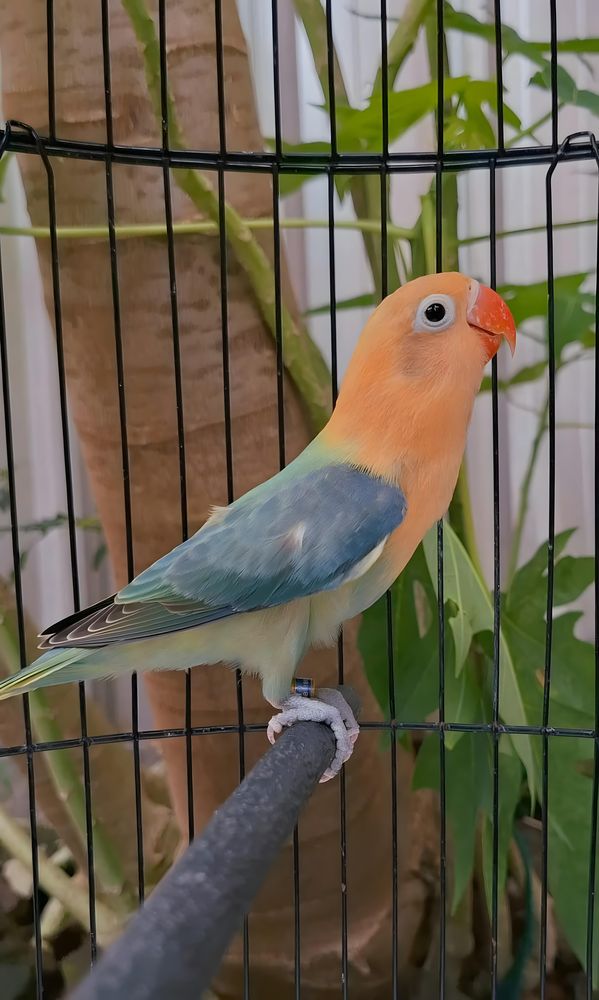
Cobalt Lovebird
A deeper, richer blue than the standard mutation, set off by a soft peach face.
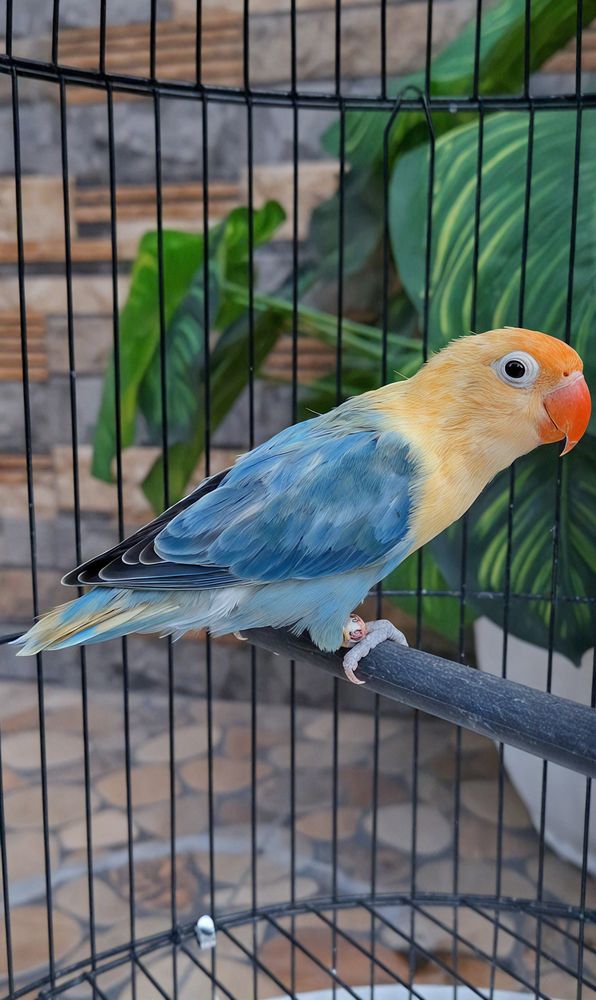
Parblue Split Ino
One of the rarer mutation combinations: softened blue tones under a pale wash.
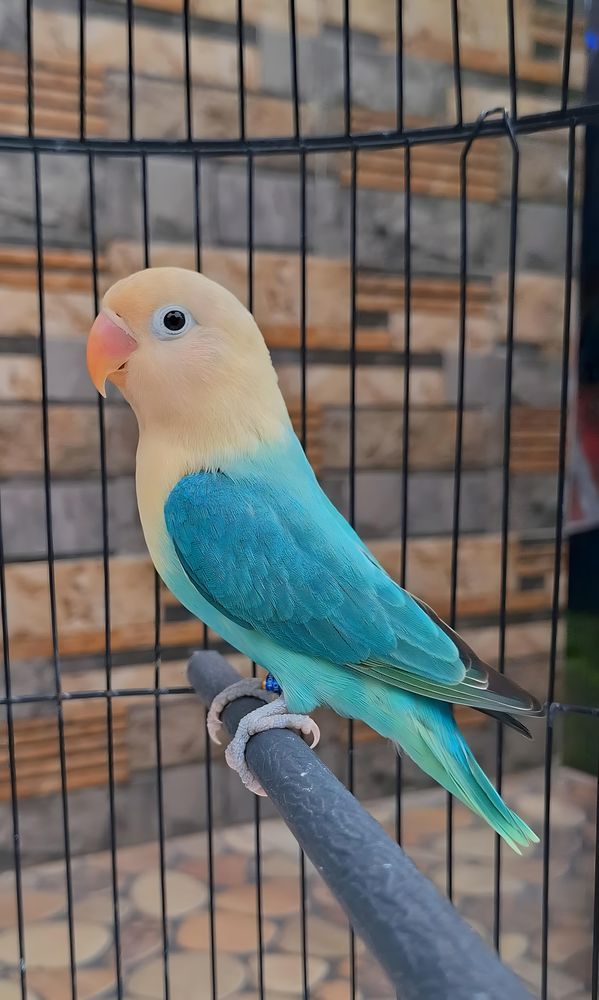
Turquoise Lovebird
A cooler, teal-leaning shift from standard green, same bold personality.
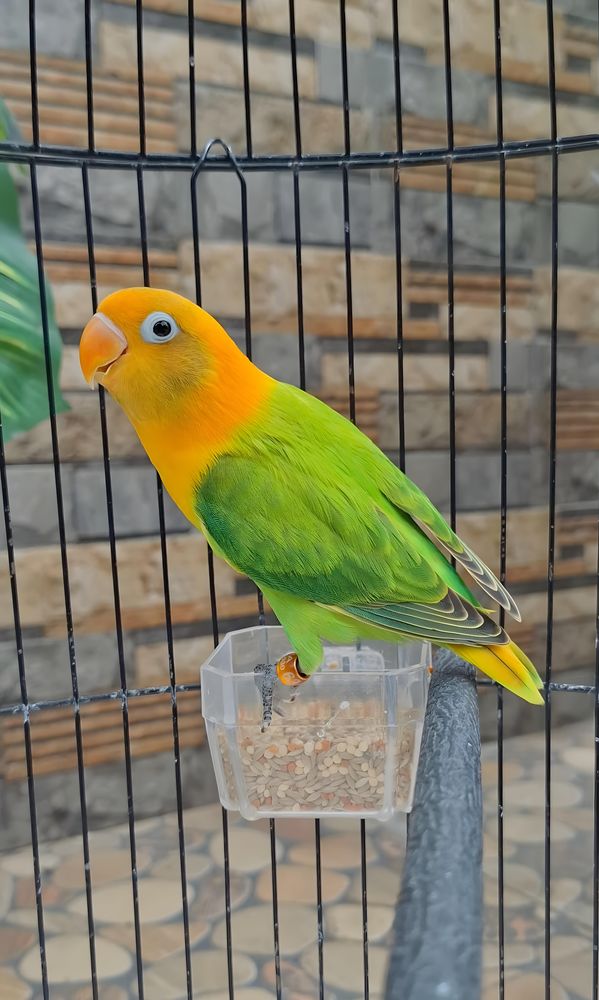
Green Peach-faced
Closer to the wild coloring: vivid green body with the classic orange face.
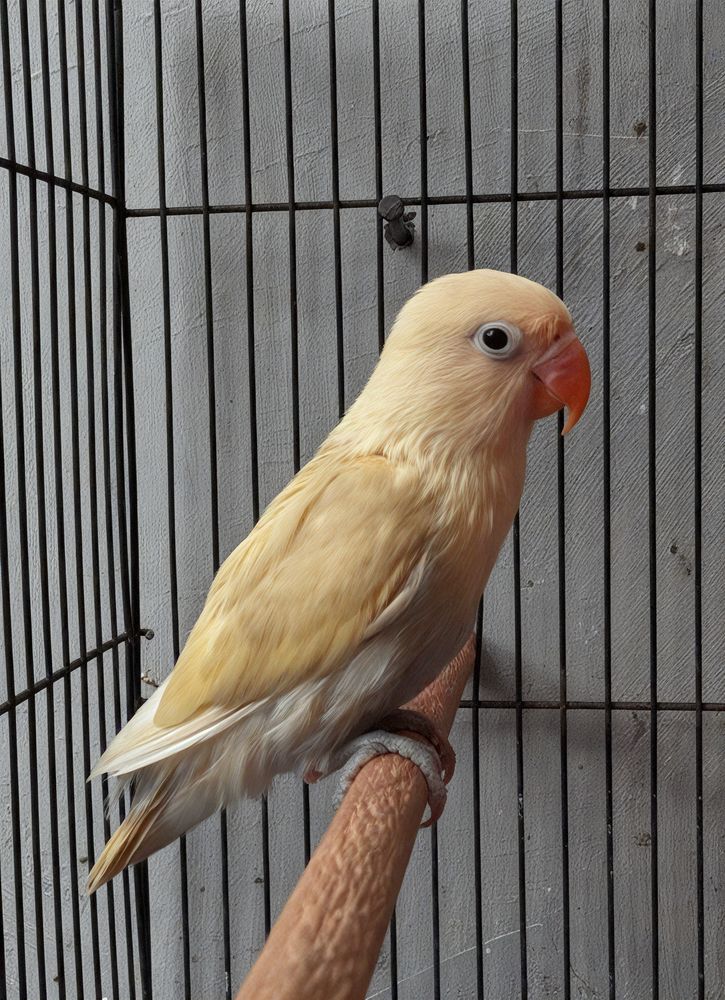
Pastel Yellow
A softened yellow mutation, paler than lutino with muted red eyes.
Fresh from the nest
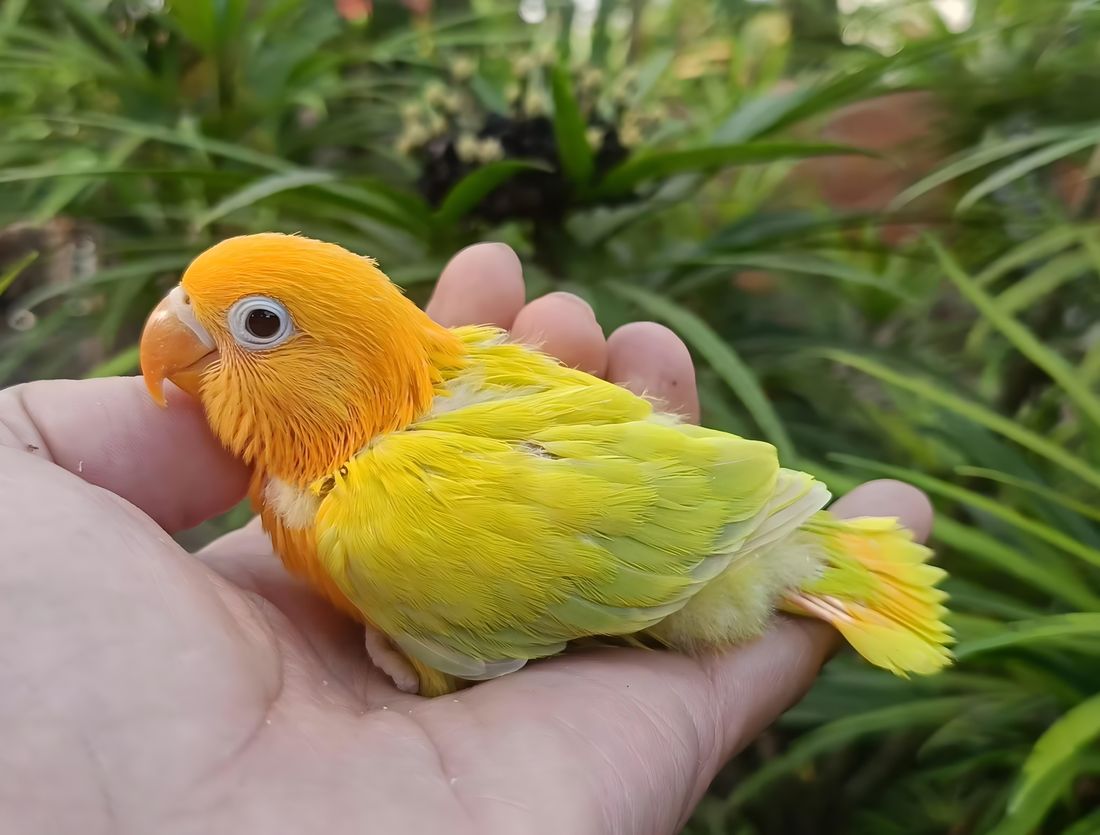
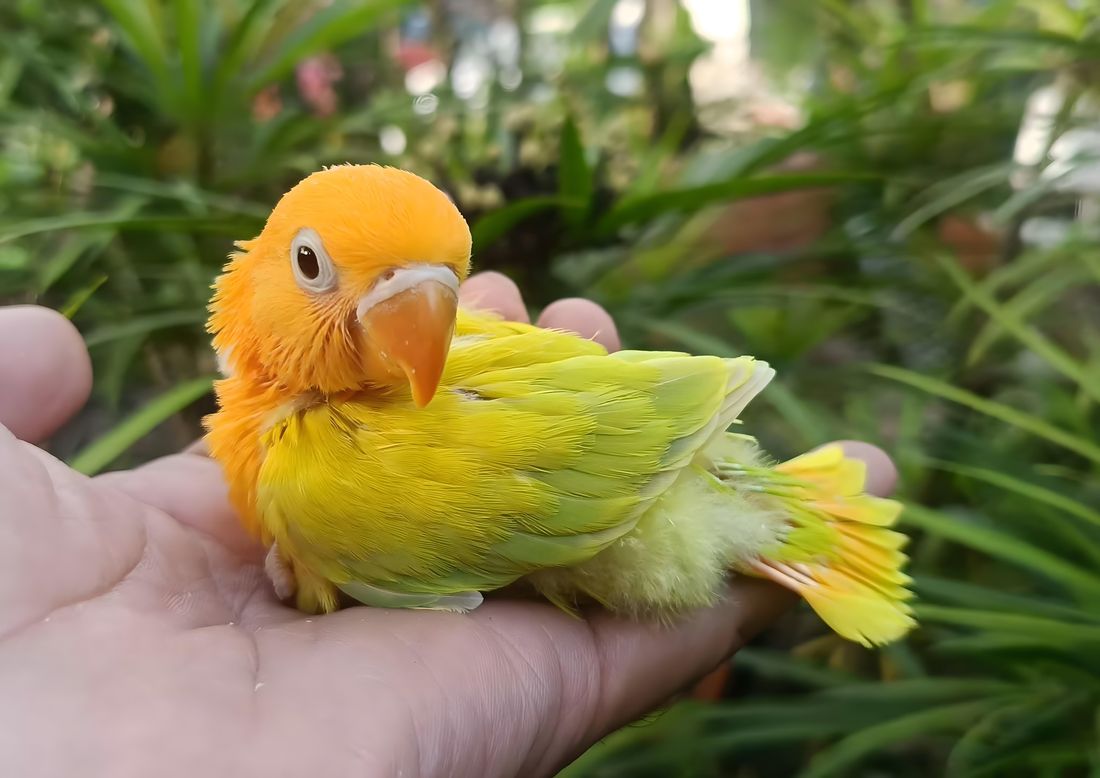
Hand-fed chicks a few weeks from fledging. Full adult color is still a couple of molts away. Follow along on Facebook to watch them grow into their feathers, or read our breeding basics.
Set your lovebirds up right
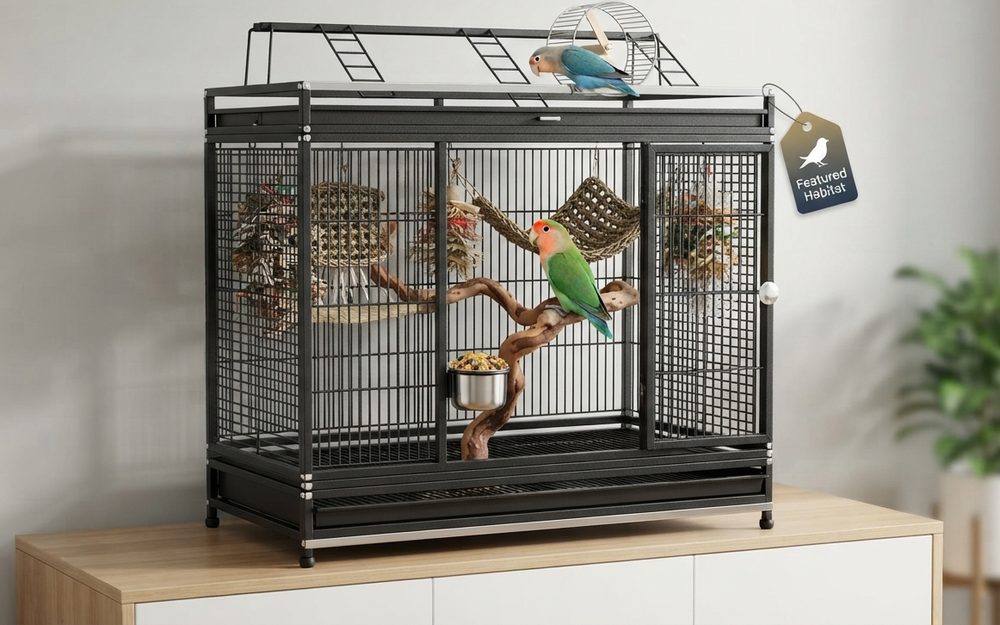
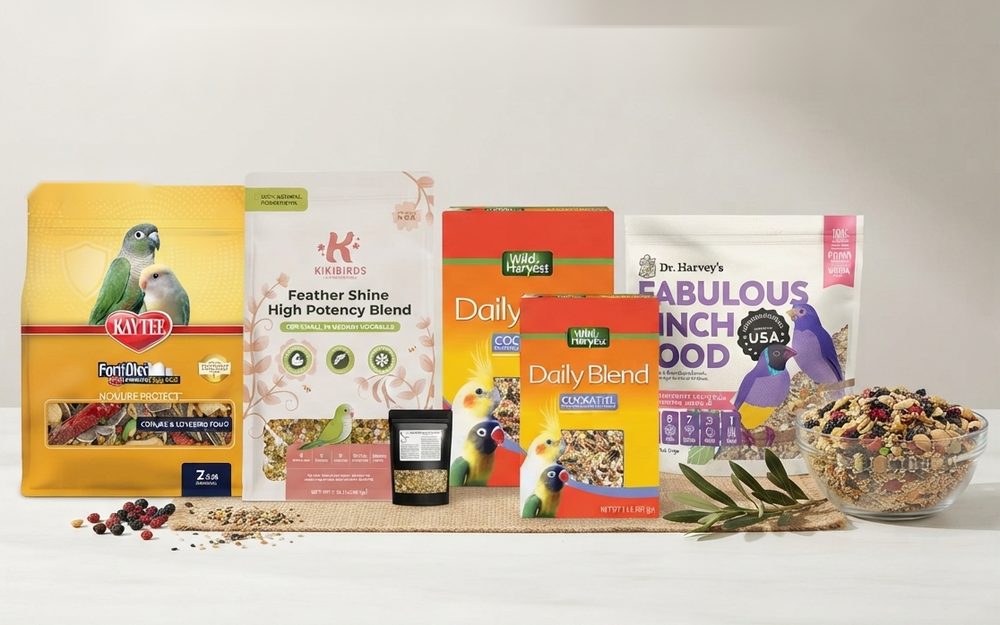
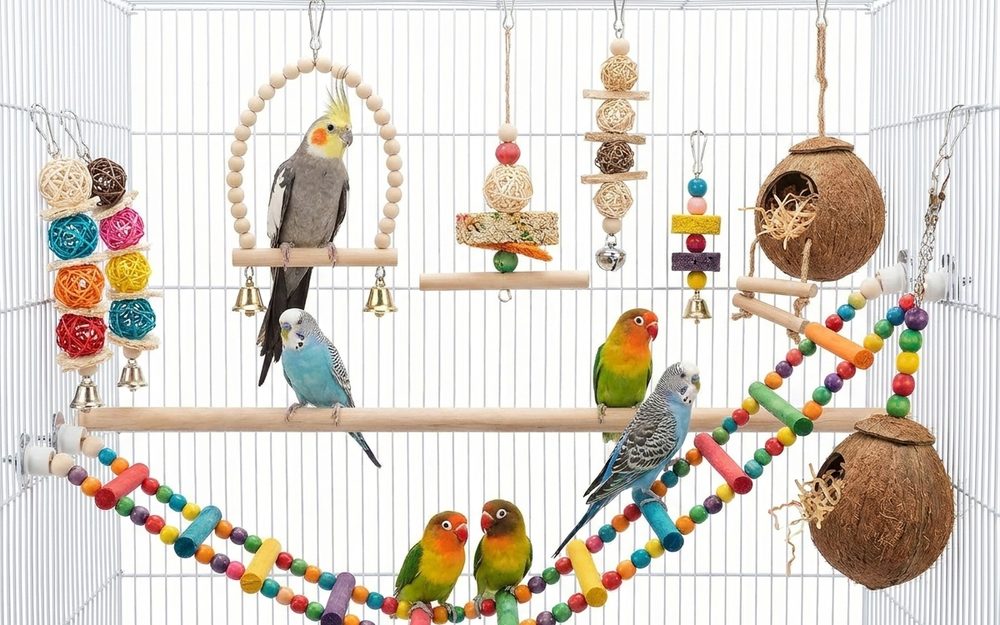
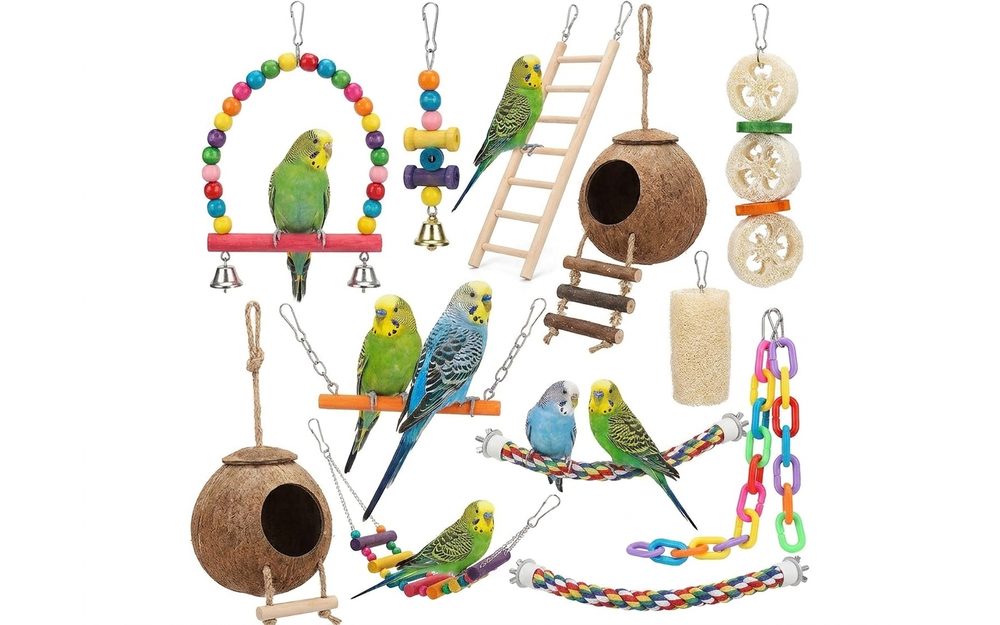
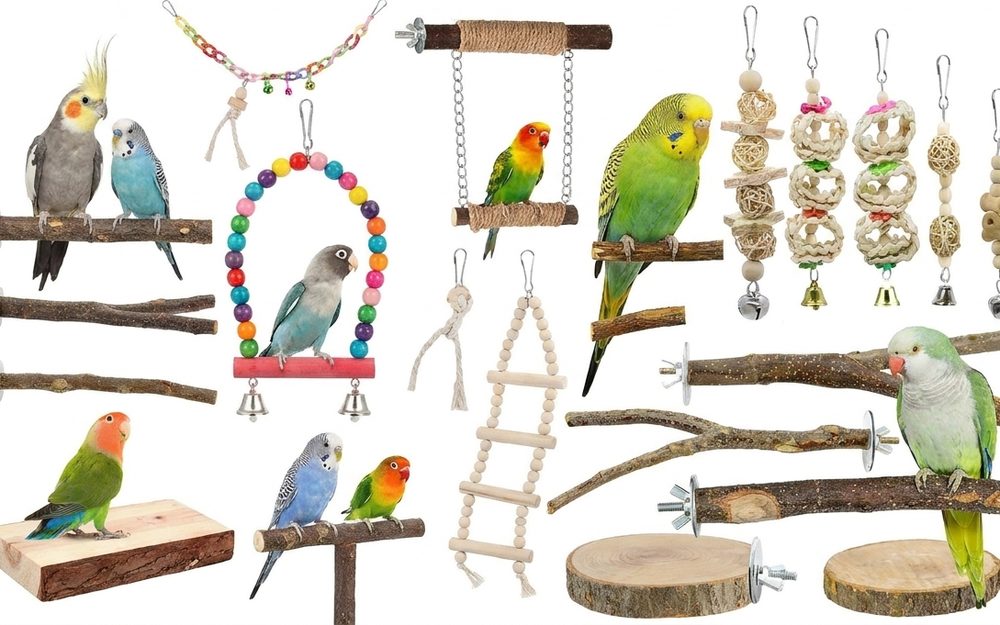
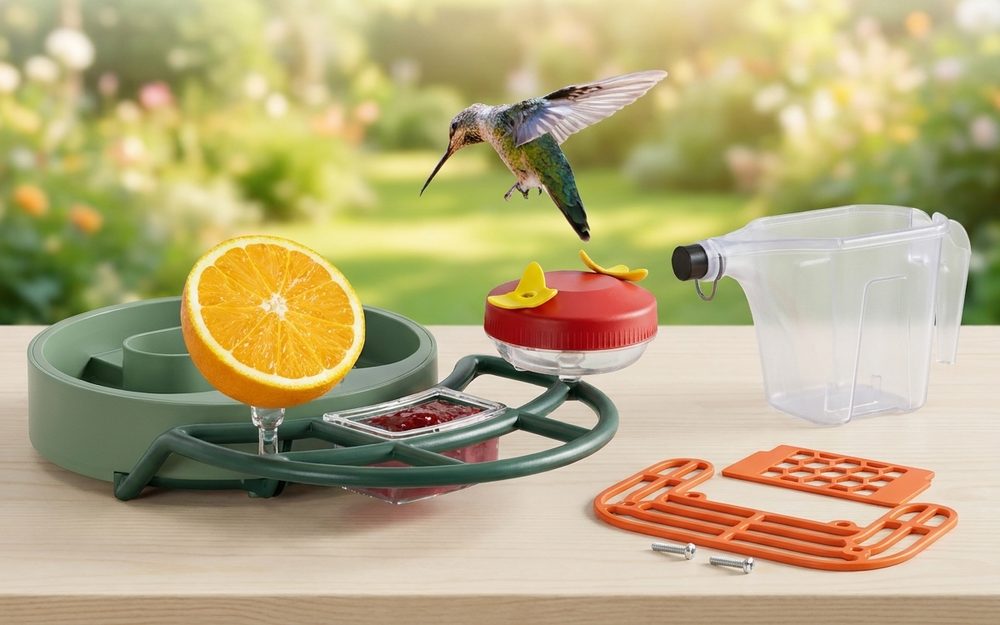
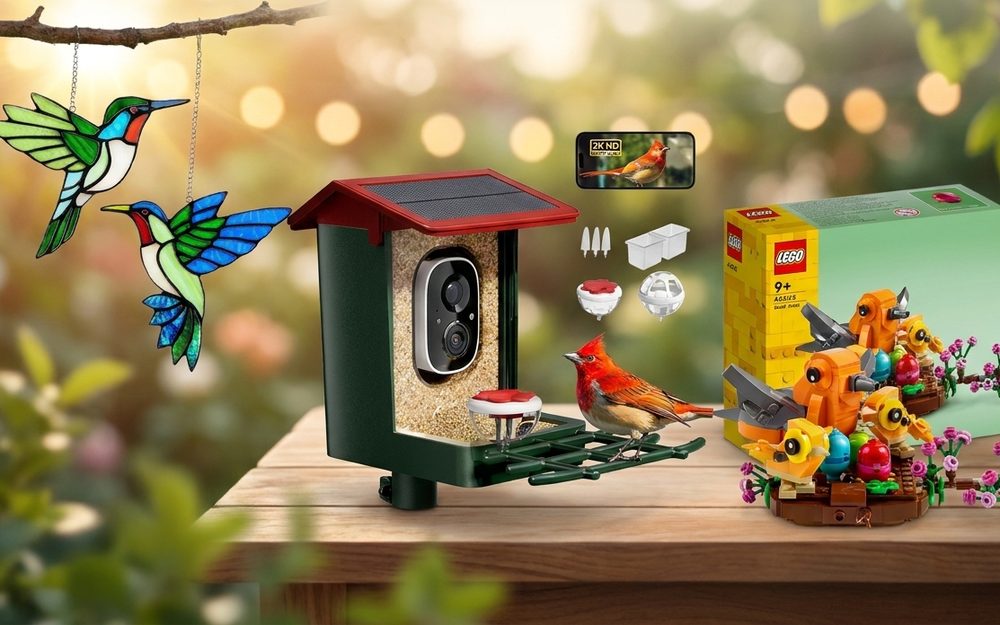
The main categories every lovebird owner shops for. Each button opens current options on Amazon so you can compare sizes and prices.
Follow along
Daily flock photos, care questions answered and new arrivals, posted first on Facebook.
Follow on Facebook